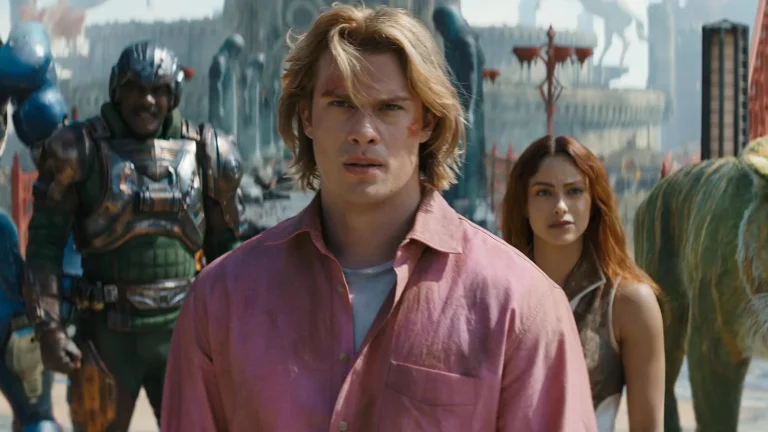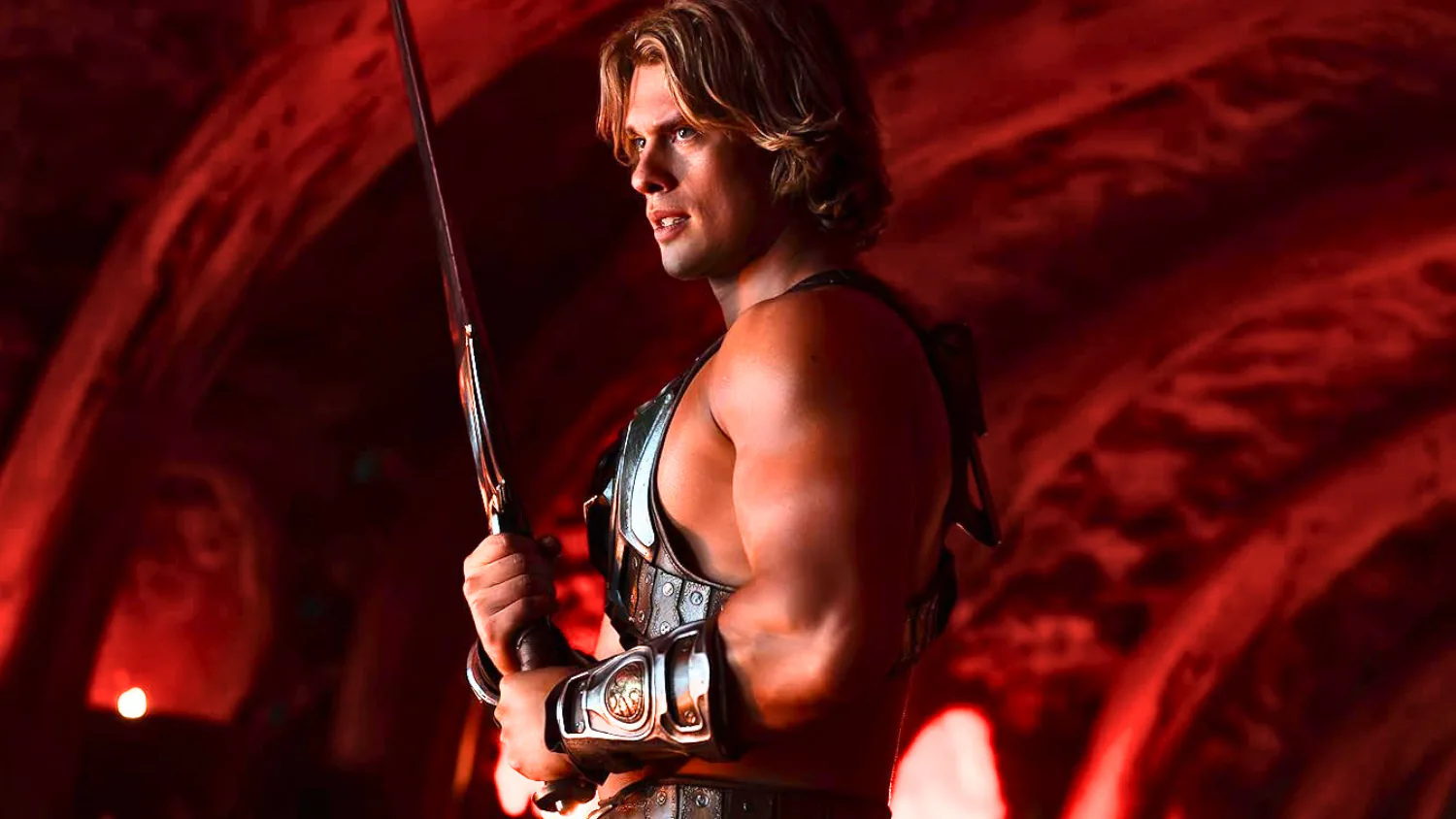
Masters of the Universe just opened to $54.3 million worldwide against a budget reported anywhere from $170 million to nearly $200 million.
By any normal box office standard, that is a bomb.
Amazon MGM does not want to say that.
In a statement to Variety, Amazon MGM domestic distribution chief Kevin Wilson called the opening “truly special” and framed the result as proof that the studio’s strategy is working.
Sorry, but no.
A $54 million global debut on a movie that may have cost close to $200 million is not “truly special.” It is exactly the kind of opening that gets a franchise killed before it starts.

Amazon Tries To Spin The Opening
Wilson praised director Travis Knight and the cast for delivering “something truly special,” which is the kind of thing studios are always going to say after opening weekend.
The problem is what came next.
He called the opening a “critical first moment” that validates Amazon MGM’s “holistic distribution strategy.” In plain English, the studio is trying to frame a weak theatrical debut as part of a bigger plan.
The key phrase comes later, when Wilson says the movie is “building awareness and engagement that will carry well beyond the theatrical window.”
That is the escape hatch, but it doesn’t add up.
Amazon is basically saying the movie still has value because it can live on Prime Video after theaters. That may be true for Amazon’s content machine, but it does not change the box office result.
A bomb with a streaming backup plan is still a bomb.
Streaming Does Not Erase The Box Office
This is where Amazon’s argument gets slippery.
Amazon does not need Masters of the Universe to work in theaters the same way a traditional studio would. The movie can still become Prime Video content. It can still drive views. It can still sit on the platform as a recognizable title.
Fine. Streamers play a different game.
But that does not mean the theatrical release worked.
If the box office was not the main point, then Amazon should just say that. Instead, the studio is trying to make a weak opening sound like proof the plan succeeded.
It did not.
Masters of the Universe was sold as a theatrical franchise starter. On that level, the opening failed.
Their argument also doesn’t hold weight, considering they also recently announced Henry Cavill’s Voltron movie is going straight to streaming. If box office results don’t matter, why not give it a theatrical release? Same for the first Road House?
The Math Is Ugly
Take away the corporate spin, and the numbers are simple.
Masters of the Universe earned $29.3 million domestically and just $25 million from 86 overseas markets.
That is $54.3 million worldwide for a movie with a reported budget as high as nearly $200 million, before marketing.
Theaters also keep a large chunk of ticket sales, which means the studio’s actual cut is far below that $54.3 million number.
And if the budget is $200 million, the break-even alone is now around $500 million, not the $425 million on the lower end.
So no, this is not a strong start. It is not a hidden win. It is not some clever long-game success story.
It is a very expensive movie opening far too low.
Even the box office analyst quoted by Variety called it a “soft” opening for a movie with franchise ambitions, and that is putting it mildly.
The Audience Data Makes The Spin Worse
Amazon’s claim about building “awareness and engagement” also runs into the audience data.
The opening crowd was 66% male, and nearly 40% were over the age of 45. In other words, the movie mostly reached the people who already knew He-Man from the 1980s cartoon and toy line.
As the demographic breakdown showed, kids and teens barely turned out at all.
If the goal was to build a “new” audience for He-Man, the opening weekend did not show it. Amazon’s “Barbie” approach completely backfired and failed.
The movie did not bring in the younger crowd. It did not bring in enough families. It did not bring in women and girls. It did not turn He-Man into a new pop-culture event.
It mostly played to the same aging base the property already had.
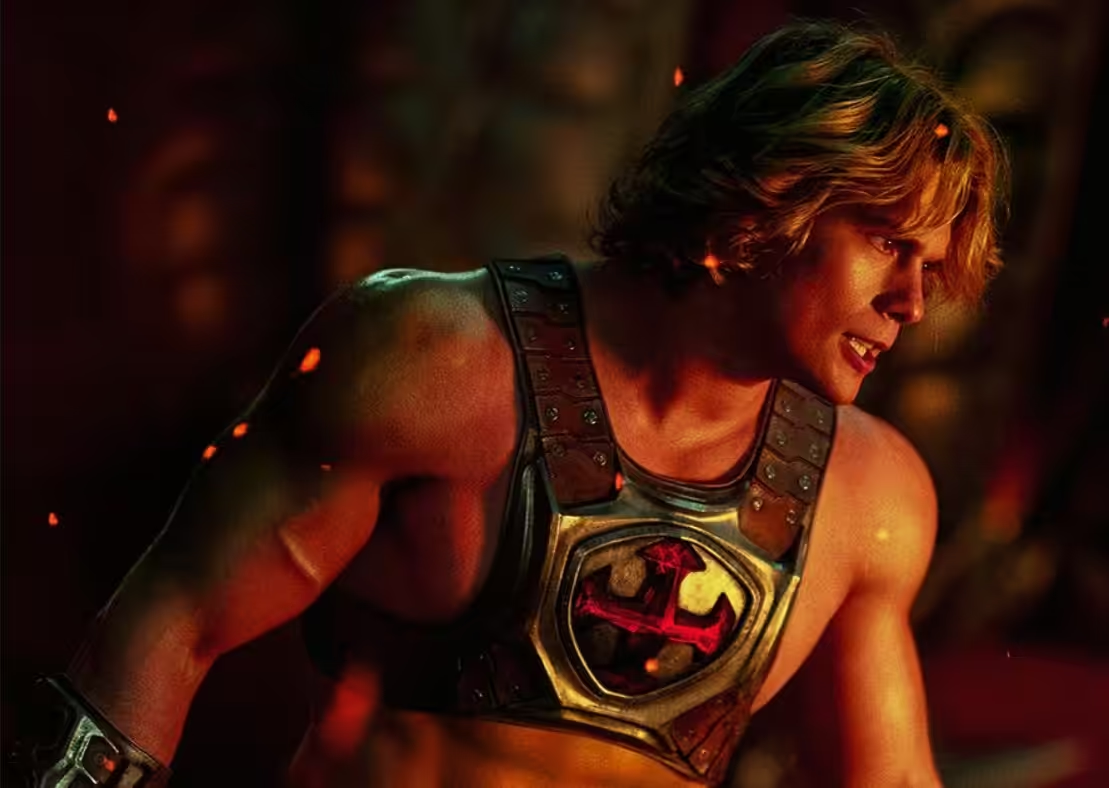
Call It What It Is
The worldwide number closed the book on the theatrical launch. Masters of the Universe opened too low domestically, opened too low overseas, and failed to bring in the new audience Amazon MGM and Mattel needed.
The reasons are not complicated, either. The movie was built around the wrong strategy, marketed poorly, and never made He-Man feel like the must-see event a $170 million-plus franchise starter needed to be.
Amazon can talk about different barometers, streaming value, and long-term engagement all it wants.
The box office says something much simpler.
Masters of the Universe bombed.
UPDATE: With a projected ~68% drop to $9.4M and a slide to fifth place, the film’s second weekend makes that spin even harder to sustain.